
Union City Resident Lookup Coverage
The first step is to name the fact that needs confirmation. Ownership, registration, a court appearance, a vital event, a business role, and a historical residence are not interchangeable. This coverage table maps each question to the record set most likely to answer it.
| Record | What It Confirms | Where to Search | Access |
|---|---|---|---|
| Assessor parcel | Parcel, site address, assessment facts, and a path to ownership | Alameda Assessor | Free address or APN route |
| Recorded documents | Named grantor, grantee, lien party, date, and instrument | Alameda Clerk-Recorder | Index and paid copies |
| Voter status | One voter's registration and election status | California My Voter Status | Identity-gated self-lookup |
| Superior Court | Case, party role, filing events, and public documents | Alameda eCourt | Account, preview, and paid images |
| Vital records | Birth, death, marriage, or dissolution event clues | Alameda County or CDPH | Copy type and eligibility rules |
| Business or license file | Entity, agent, credential, or public discipline link | California SOS, DCA, or board | Usually free public search |
Use the record that fits the question, then add a second source. An assessor result can anchor a parcel, but it does not prove the titled party lives there. A court index can show a case, but a name match does not establish identity or the outcome. A license or entity address is a professional or business connection, not a private residence.
Start a Union City Resident Lookup
The same-name problem is common in a county as large as Alameda. Search exact spelling, shortened forms, initials, hyphenated names, former surnames, and reversed name order where a portal permits it. Then add the year or date range, a known street or city, a middle initial, a relative, or a public role. Do not merge two people because they share a first and last name. A careful resident lookup uses that time-and-place detail before it treats a name as a match.
Separate the address types before drawing a conclusion. A situs address is the physical parcel. A tax mailing address is where notices go. A business agent address is for service. A court filing address may be stale. A custody or registry entry has its own disclosure rules and update cycle. The word “address” does not make all these records evidence of current residence.
For a Union City property connection, begin with the map or property-address search, record the APN, then use the current party and deed trail. For a personal election question, use the identity-gated voter tool. For an older resident, add Alvarado, Decoto, and Washington Township because Union City incorporated in 1959.
Note: A stable identifier is more useful than a long list of unverified name-only hits in a public record search.
Union City eCourt Party Lookup
Alameda Superior Court's eCourt portal covers civil, family, probate, mental-health, and adoption case information through a secure web application. Portal functions require an account. The documented search flow includes login or account creation, a Searches menu, a case-number field, a robot check, and a Search button. Party-search fields are dynamic and not fully exposed in the public landing material, so avoid promising a particular date filter or wildcard behavior.
A public result can identify the case name, case number, case type, type of action, party information, register or docket events, department information where public, document name, filing date, filer, half-page preview, and a paid image link. A docket is the time-ordered case record of filings and events. It is not the same as the full file, and a public allegation is not a finding.
The Northern District PACER search capture is a separate federal example. PACER searches by party name or case number and returns caption, parties, attorneys, document entry number, date, title, and filer. In 2026 most documents cost $0.10 per page, capped at $3 for most single documents, with quarterly charges of $30 or less waived.
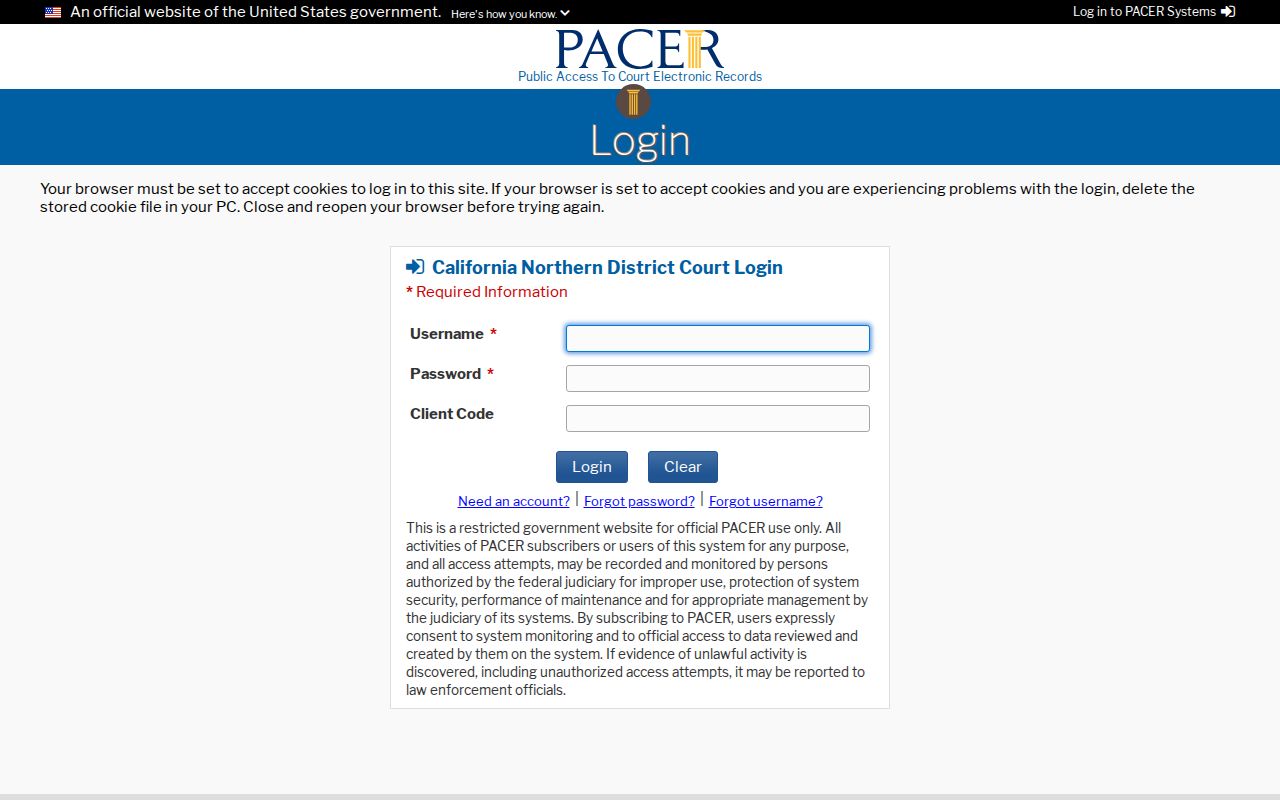
The PACER image shows the separate federal route. It should be used only when the court jurisdiction fits, with restricted or sealed documents left unavailable.
For Alameda cases, confirm the party role and filing dates before treating a case result as the target Union City resident. When remote access is narrow, the clerk or courthouse terminal is the correct next step.
Verify One Union City Resident Across Records
Verification should move from a broad lead to a specific identifier. The sequence below is designed for a person whose name and a possible Union City connection are known.
- Record exact and variant name forms, approximate age or event year, and the fact that needs proof.
- Anchor the name to a parcel, public case, entity, license, historical address, or other independent clue.
- Search the matching custodian, then save the case, parcel, instrument, license, or entity number.
- Compare a second record for time and role, such as a deed with a parcel or an obituary with a dated directory.
- Order a certified or informational copy only when the official custodian's rules and the research purpose permit it.
- Docket
- A court's running record of case events, filings, and entries.
- Index versus image
- An index helps locate a record; an image is the underlying filing or instrument and may require a fee or restricted access.
- Certified copy
- A copy issued or authenticated by the custodian as a true record copy for the uses allowed by law.
- Informational copy
- A certified vital-record copy marked as not valid to establish identity, with access different from an authorized copy.
Keep a short research log. Include the URL, search date, spelling used, filters, result identifier, and reason the second source supports or weakens the match. That record helps correct an error without turning an uncertain name into a public claim.
Union City Vital Record Clues
For a Union City event, the Alameda County Clerk-Recorder is usually the quickest certificate route, while CDPH-Vital Records is the statewide alternative. The county health registrar holds current and immediately preceding-year births and deaths. Divorce files belong to Alameda Superior Court, while CDPH may issue a certificate of record rather than the full decree.
Health and Safety Code sections 103525 and 103526 separate informational copies from authorized identity-valid copies. An informational birth, death, or public-marriage copy is generally available for nonconfidential records, but it carries a legend. An authorized copy is limited to listed categories and may require a notarized sworn statement when mailed. Confidential marriage copies are limited to a party or court order. Adoption records remain confidential under separate rules.
| Record | 2026 CDPH fee | Research caution |
|---|---|---|
| Birth | $31 | No unrestricted statewide name index |
| Death | $26 | Historical clues do not replace a certificate |
| Public marriage | $19 | Copy eligibility still applies |
| Dissolution certificate | $18 | Not the same as the court decree |
Application fields include applicant contact information, copy count and type, names, event date and place, parents or spouse information as relevant, purpose, relationship, and signature. A no-record result may still carry the search fee. A vital clue can support a resident lookup, but the copy type controls what it proves.
Find an Heir Through Probate and Transfers
Probate can answer a different question from a property search. A petition or docket may identify a decedent, personal representative, heir, interested party, or attorney. Start with the decedent's legal name and variants, then compare a court case with an obituary, death record, and recorded transfer. Keep the relationship as a research lead until the underlying document supports it.
Recorded deeds can show a later transfer, but the grantor or grantee is not automatically the person who lived at the address. An obituary can name relatives, but it is a notice rather than a certified vital record. Court images may be restricted, and confidential attachments should not be inferred from an index entry.
The California Department of Social Services is the official route for adoption and birth-parent reunion procedures. Original adoption files and altered birth records are not open people indexes. A family-history search should use the consent, contact, and court-order processes instead of trying to infer a protected identity from unrelated records.
For older Union City families, the Washington Township Museum's early-family papers, African-American history, “Homes of Vallejo Street,” and 340-person Pioneer Genealogical Database can supply names and connections. Verify the compiled material with primary records.
Union City Business and License Trails
A business or professional lookup can help distinguish a person with a common name, but its address is not necessarily a home. California Secretary of State Bizfile searches by entity name, keyword, or entity number. Results can show entity name, number, type, formation or registration date, status, jurisdiction, principal or mailing address, agent for service, and filing history. Statements may identify managers, members, or officers depending on the entity and year.
Alameda fictitious-business-name files connect a trade name to a registrant or legal entity, business address, filing, expiration, and number. The Union City business-license search supplies municipal premises evidence. A professional board then supplies the credential-specific status and public discipline record. Compare the entity number or license number, not just a person name.
The California Department of Consumer Affairs search capture shows the multi-board route. Its fields vary by board and can include board or bureau, license type, license number, business name, and first or last name.
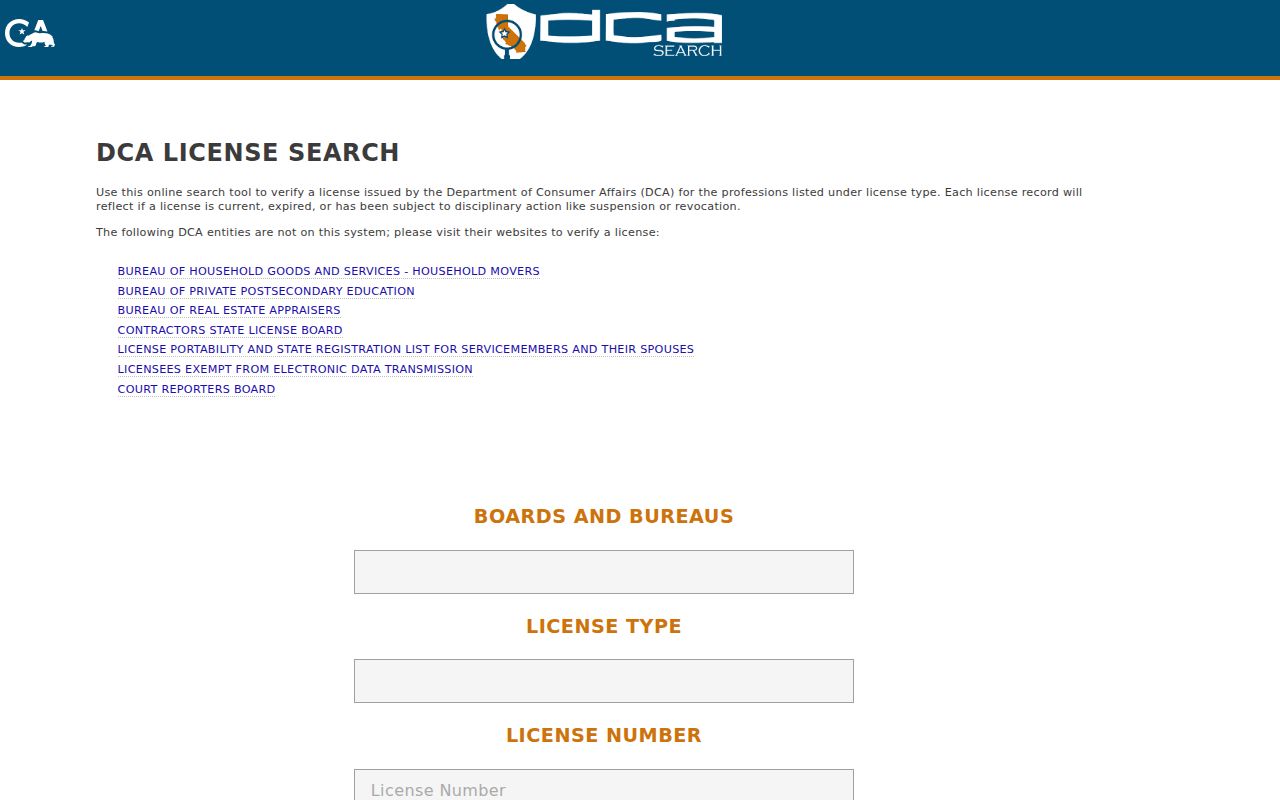
The displayed result should be read as a credential record with its own status and date, not as proof of a Union City residence.
The State Bar attorney search capture adds a board-specific example with name or bar-number searching, status, admission date, public contact, education, and discipline.
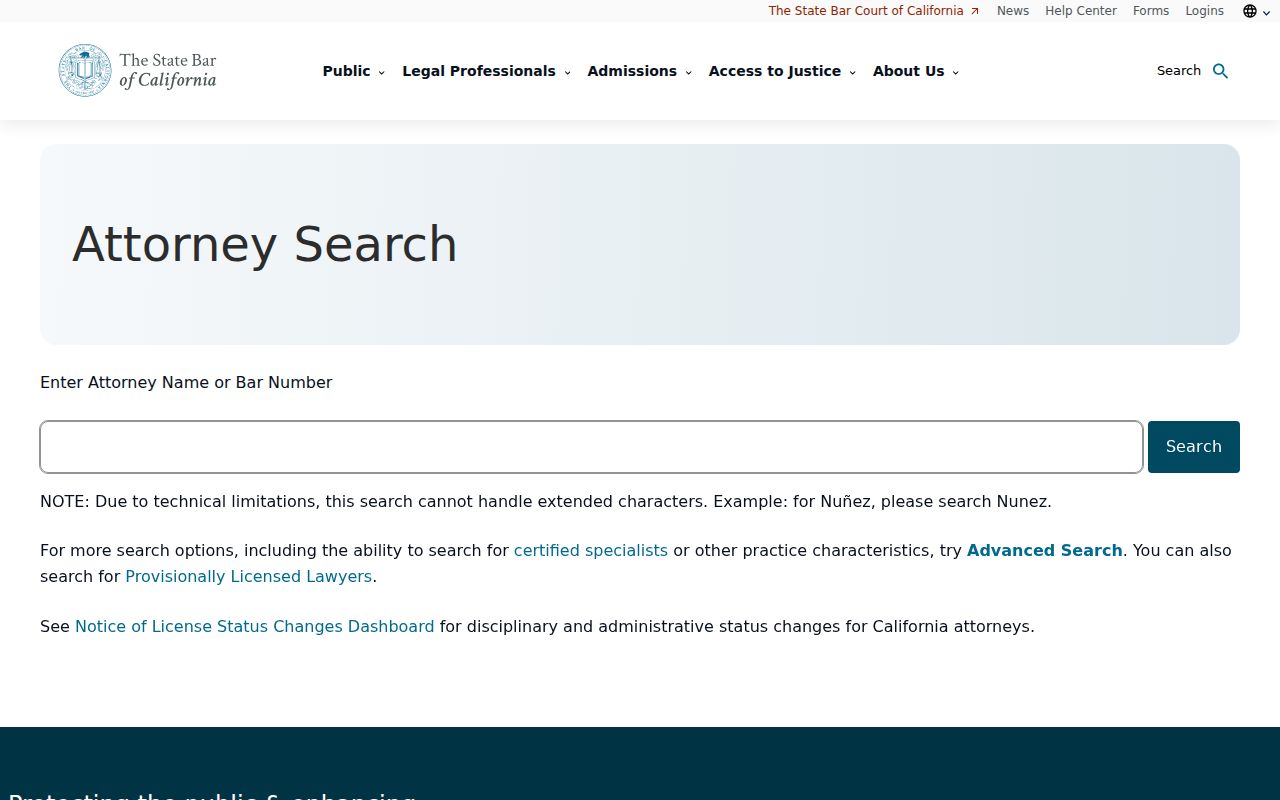
A license number, entity number, and matching time period make a one-person lookup more defensible than a name-only result.
Union City Unclaimed Property Clues
California's Controller unclaimed-property search can show a name, business, reported address, or city clue tied to property held by the state. It is free to search, but a match does not prove current residence, ownership of a parcel, or a relationship to another person. A claim requires proof and follows the Controller's process.
Use a returned name or city only as a lead. Compare it with a known year, entity, obituary, or address record, and do not treat an old reported address as current. The result may concern a former owner, an organization, a namesake, or property reported by a holder that no longer has current contact information.
The California unclaimed-property capture shows the separate state search channel.
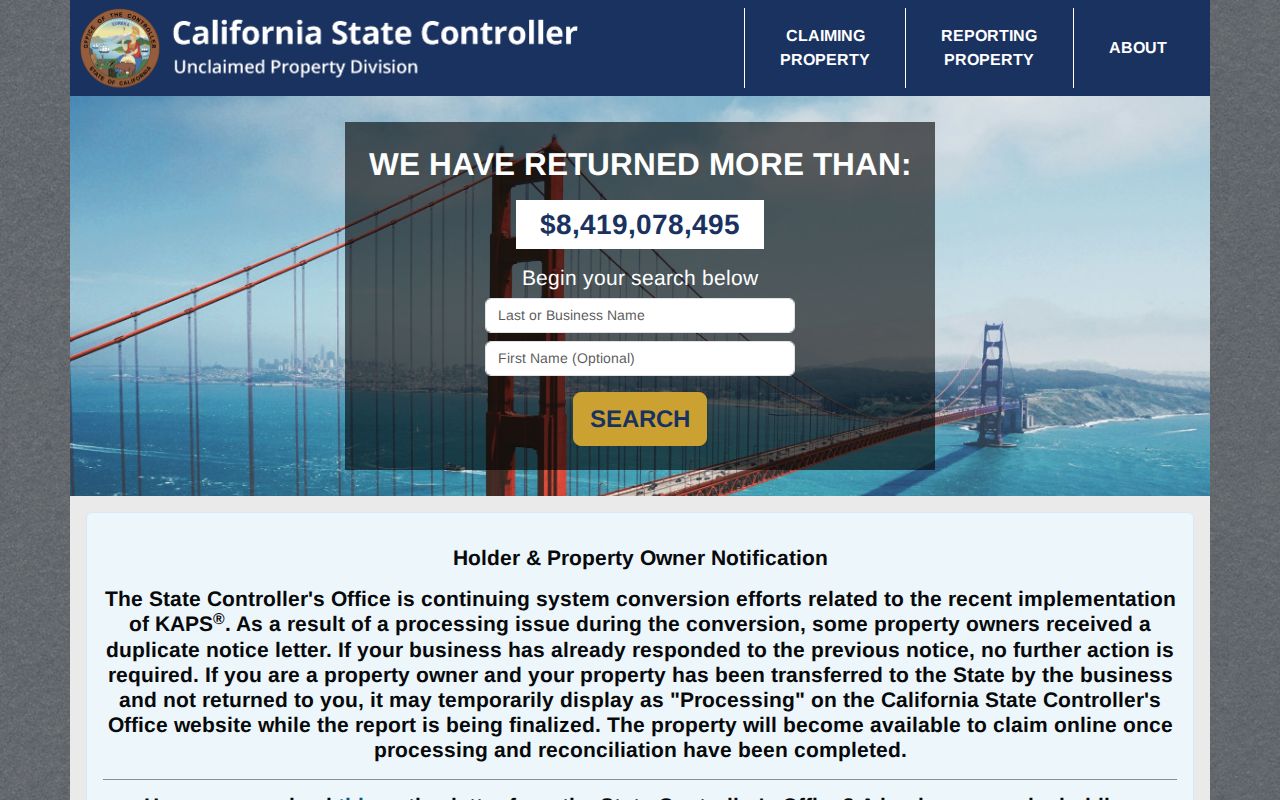
It belongs near other state-level clues, but it cannot replace a deed, court file, vital record, or personal confirmation.
Union City Resident Lookup at the Courthouse
California Rule of Court 2.503 distinguishes remote access from courthouse electronic access. Civil records are generally more available remotely, while detailed criminal, family, juvenile, guardianship, conservatorship, mental-health, and several protection-related records may be limited to a courthouse terminal. Adoption and juvenile matters may be confidential altogether. Sealed records remain unavailable without the required order.
A clerk may provide basic information, such as whether something was filed or when a hearing is set, but clerks do not generally perform open-ended identity research by phone. For a copy request, provide a case number, document title, and filing date. Certified or exemplified copies have different procedures and costs. If the web result is empty, ask which access channel matches the case category before assuming no record exists.
That distinction is central to a Union City resident lookup. Public availability is record-specific. A remote result may be only an index, a preview may omit the full image, and a truly confidential file may not be listed at all.
Limits on a Union City Resident Lookup
California's privacy rules shape every name search. Voter information is released only for limited purposes under Elections Code section 2194, with identity credentials withheld. Safe at Home protects eligible participants through a substitute address. DMV information is restricted by the federal Driver's Privacy Protection Act. Public documents can contain redacted fields, and a wrong assessment, deed-index, court, voter, or license record must be corrected with its custodian.
Commercial directory removal is different from an official correction. California's CCPA and the Delete Act create rights and a DROP process for covered data-broker records, but those processes do not erase a lawful county deed, court docket, assessment record, or vital record. Save the profile URL, request date, verification result, and confirmation when using a removal route.
Lawful personal use. A Union City resident lookup is for lawful research, family history, civic understanding, and personal reconnection. Never use a record to stalk, harass, intimidate, or harm anyone, and do not publish protected addresses or sensitive identifiers.
Note: A missing result may reflect a confidentiality rule, an identity mismatch, a separate court system, or a record that needs an office or library search.
Correct a Union City Match
When two people have been merged, do not solve the problem by adding more guesses. Identify the source record, note its case, parcel, instrument, entity, or license number, and contact the custodian's correction or records office. An assessor issue belongs with the Assessor. A deed-index issue belongs with the Clerk-Recorder. A voter issue belongs with the Registrar of Voters. A license issue belongs with the board.
For a historical name, return to the volume's coverage statement and abbreviation key. Recheck Alvarado, Decoto, Washington Township, and Hayward before concluding that a household is absent. For a court result, compare case number, party role, dates, and disposition. For property, match the legal description instead of relying on the street label alone.
A careful correction trail makes a Union City resident lookup more useful over time. It also keeps a public index in its proper role: a way to find the custodian's record, not permission to invent a biography from scattered entries.